What Is a Sales Funnel? A Simple Explanation for Coaches and Consultants
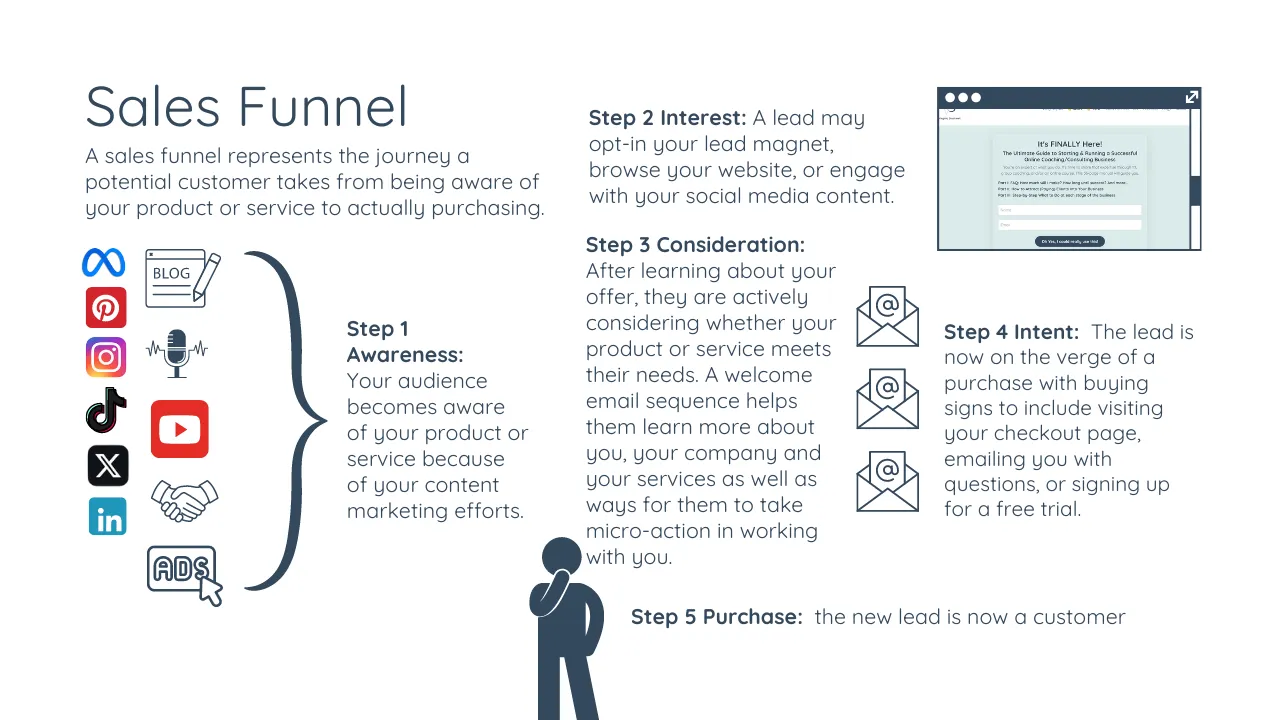
If you run an online business based on your expertise, a funnel organizes how people discover your work and eventually become clients or customers.
A funnel is not complicated software or a secret marketing strategy. It is simply the path someone follows from first discovering you to deciding to work with you.
For coaches, consultants, teachers, course creators, authors, therapists, and other knowledge based professionals, funnels help turn attention into real opportunities.
Even a small audience benefits from a funnel because it creates structure around how people move from curiosity to commitment.
Who Needs a Sales Funnel
Anyone building an online business around their knowledge benefits from having a funnel.
This includes:
-
coaches
-
consultants
-
course creators
-
authors
-
educators
-
therapists
-
digital product creators
A funnel organizes how people find your work, how they learn about what you offer, and how they eventually decide to work with you.
Without a funnel, potential clients may see your content but never know what to do next.
What a Sales Funnel Actually Is
A sales funnel describes the step by step journey someone takes before becoming a client or customer.
In practical terms, a funnel usually includes:
-
content that introduces people to you
-
a landing page offering a free resource
-
an email sequence that builds trust
-
an invitation to buy a product or service
The funnel begins when someone discovers your content online. The process continues as they explore your ideas, join your email list, and eventually decide to purchase something you offer.
The word funnel comes from its shape.
At the top, many people see your content. As the process continues, fewer people move through each step until a smaller group becomes customers.
Example of How a Funnel Works
Imagine that 1,000 people read one of your articles on LinkedIn.
From those readers:
-
100 people click the link in your profile to visit your website
-
those 100 visitors see an offer for a free PDF guide
-
60 people download the guide and join your email list
-
your email sequence introduces your work and explains how you help people
-
around 2 or 3 people eventually purchase your program
This example reflects a typical funnel progression.
Out of the original 1,000 readers, only a small number become customers. The funnel helps organize the steps that guide interested people toward that decision.
Each stage of the funnel serves a purpose:
-
content creates visibility
-
the free resource collects contact information
-
emails build trust
-
the offer creates an opportunity to work together
Why Sales Funnels Often Feel Confusing
Many people hear the term “funnel” frequently but rarely see it explained clearly.
Part of the confusion comes from the fact that a funnel is not a single page or tool. It is a system made of several parts working together.
A funnel typically includes:
-
content such as blog posts, videos, or social media
-
landing pages on your website
-
automated email sequences
-
an offer such as coaching, consulting, or a course
When these elements are created intentionally, they guide people smoothly through the customer journey.
Without a funnel, these pieces often exist separately and feel disconnected.
How to Build a Sales Funnel Step by Step
A simple funnel can be built using a few clear steps.
Step 1: Create Content That Attracts Attention
Choose a platform where your audience already spends time.
Examples include:
-
LinkedIn
-
YouTube
-
Instagram
-
blogging on your website
Share useful advice, answer common questions, and provide insights based on your experience.
This content introduces people to your expertise.
Step 2: Offer a Free Resource
Encourage interested readers or viewers to visit your website by offering a free resource.
Examples include:
-
a checklist
-
a short guide
-
a video training
-
a mini course
In exchange for the resource, visitors provide their email address so you can stay connected.
Step 3: Deliver the Resource and Provide a Next Step
Once someone requests the free resource, send it automatically by email.
Your thank you page can also suggest a next step such as:
-
booking a consultation
-
following you on social media
-
exploring a low cost offer
This step moves people deeper into your ecosystem.
Step 4: Send a Short Email Sequence
After someone joins your email list, send a series of emails introducing your work.
These emails can include:
-
your background and experience
-
helpful insights or advice
-
explanations of how you help clients
-
links to additional resources
The goal is to build familiarity and trust.
Step 5: Continue Emailing Your List
After the welcome sequence ends, maintain a regular email schedule.
Many creators send a weekly email sharing:
-
a new article
-
a video
-
a lesson from their experience
-
a useful strategy or tip
Consistent communication keeps your audience engaged and aware of your offers.
Turning Your Knowledge Into a Sellable Offer
Once your funnel begins attracting subscribers, the next step is packaging your expertise into something people can buy.
This could include:
-
an online course
-
a coaching program
-
a consulting service
-
a digital product
Many creators struggle with turning their knowledge into a structured offer.
Tools that help with this process typically guide you through steps such as:
-
identifying what people want to learn
-
defining your target audience
-
writing a clear value proposition
-
choosing a price point
-
planning a lead magnet
-
mapping out potential upsells
A structured approach helps move an idea from concept to something ready to sell.
Frequently Asked Questions About Sales Funnels
What is a sales funnel in simple terms?
A sales funnel is the process someone follows from discovering your content to eventually becoming a client or customer.
Do small businesses need a funnel?
Yes. Even businesses with small audiences benefit from funnels because they organize how potential clients learn about your services and how they take the next step.
What are the stages of a typical funnel?
Most funnels include four stages: awareness through content, lead capture through a free resource, trust building through email communication, and a final offer.
How long does it take for someone to move through a funnel?
Some people make decisions quickly, while others take weeks or months. Regular communication helps maintain connection until they are ready.
Do funnels require complicated technology?
No. A basic funnel can be built using a website, an email platform, and a system for delivering a free resource and sending follow up emails.
Final Thoughts
A funnel is simply the organized path someone follows from discovering your work to deciding to work with you.
Content creates attention. A free resource starts the relationship. Email builds trust. An offer provides the opportunity to move forward together.
Once the steps are in place, your funnel works quietly in the background while you continue sharing your expertise.